

Warranty costs can materially reduce profitability in durable-goods manufacturing. The impact varies substantially by industry, product maturity, warranty terms, and product quality. For some manufacturers, direct warranty expense can represent a meaningful share of product revenue, before considering related costs such as administration, logistics, customer support, and reputational damage.
The challenge is rarely limited to processing individual warranty claims. Recurring product failures, supplier quality issues, manufacturing defects, inefficient claims workflows, and limited visibility into warranty data can all contribute to higher costs.
In this guide, we explore seven practical strategies that can help durable goods manufacturers reduce avoidable warranty costs, improve product reliability, strengthen claims management, and use warranty data to support continuous improvement.
What Drives Excessive Warranty Costs?
Excessive warranty costs are typically the result of a combination of product design, manufacturing, operational, parts sourcing, and customer-related factors. While warranty management programs are intended to protect customers and reinforce confidence in a product, high warranty expenses often indicate underlying issues that require corrective action.
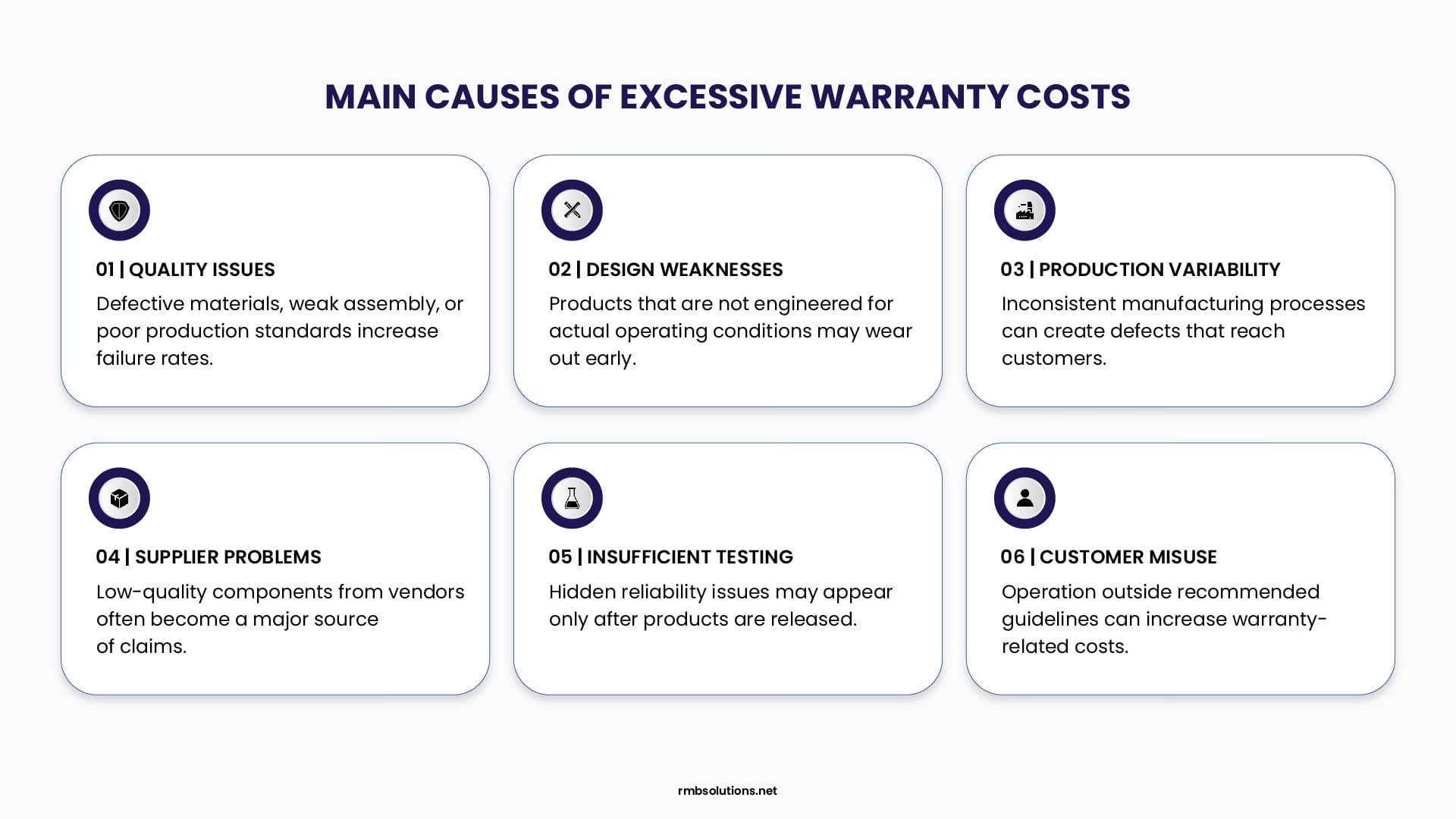
Understanding the primary drivers of warranty costs enables organizations to improve product quality, reduce financial losses, and enhance customer satisfaction. The key factors that drive excessive warranty costs include:
- Warranty Fraud: False or inflated claims, duplicate submissions, altered product information, or attempts to claim damage outside warranty terms can contribute to unnecessary warranty costs. Strong claim validation and traceability can help manufacturers identify suspicious activity and improve claim control.
- Poor Product Quality: Defects in design, materials, or manufacturing processes can lead to frequent product failures, resulting in increased warranty claims and repair expenses.
- Design and Engineering Flaws: Products that are inadequately tested or designed without considering real-world operating conditions are more likely to fail prematurely, increasing warranty liabilities.
- Manufacturing Process Variability: Inconsistent production processes, inadequate quality control, and supplier-related issues can introduce defects that are only discovered after products reach customers.
- Low Supplier Quality: Components sourced from unreliable suppliers may have higher defect rates, contributing significantly to warranty claims and replacement costs.
- Inadequate Product Testing: Insufficient validation and reliability testing before product launch can allow hidden defects to remain undetected until products are in customer use.
- Improper Product Usage: Customer misuse, lack of maintenance, or operation outside recommended conditions may increase warranty claims, particularly when warranty policies do not clearly distinguish misuse from genuine defects.
What Manufacturers Gain by Reducing Warranty Costs
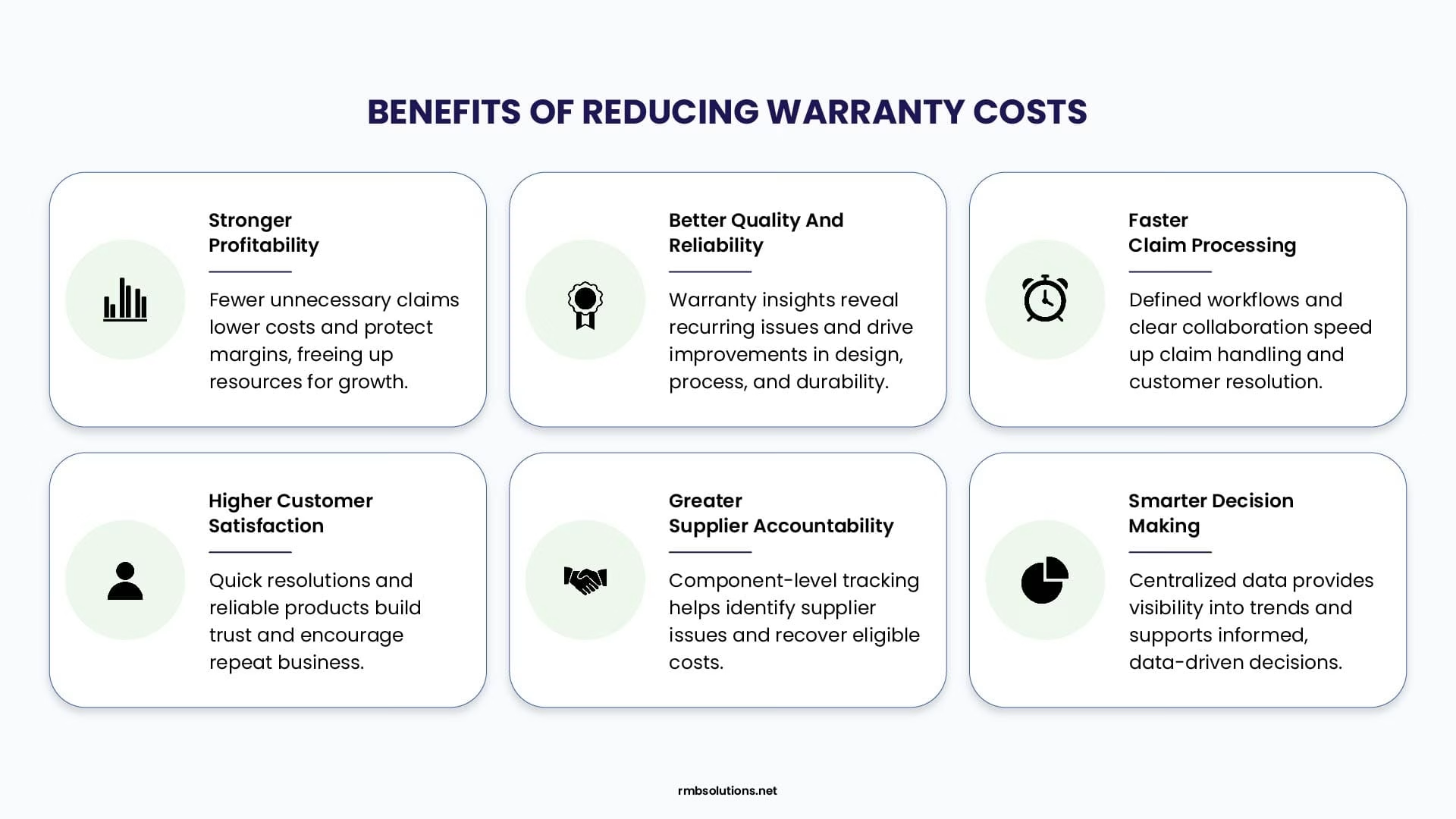
Reducing warranty costs improves financial performance, operational control, and service quality across manufacturing organizations. When manufacturers address the root causes of product failures and improve how warranty claims are managed, they reduce avoidable issues while strengthening product reliability and customer satisfaction.
The financial impact can be significant. For example, if a manufacturer spends $500,000 annually on warranty claims, a 10% reduction in those costs would save $50,000 that can flow directly to the bottom line, assuming other costs remain unchanged.
Some of the most important benefits include:
- Improved Profit Margins: Warranty claims directly affect profitability through repair labor, replacement parts, logistics, administration, and customer support costs. Reducing unnecessary claims helps manufacturers retain more revenue and reinvest in innovation and product development.
- Higher Product Quality and Reliability: Warranty data highlights recurring product issues. Reviewing these patterns helps engineering and quality teams correct design weaknesses, improve production processes, and enhance product durability.
- Faster Claim Processing: Clear and structured workflows reduce delays in claim handling and improve coordination between departments, leading to quicker resolution for customers.
- Better Customer Satisfaction: A smoother warranty experience builds customer trust. Faster resolution times and fewer product issues improve satisfaction and encourage repeat business.
- Greater Supplier Accountability: Tracking failures at the component level helps identify supplier related issues and supports recovery of eligible costs while improving part quality.
- Improved Decision Making: Centralized warranty information provides visibility into trends across products, suppliers, and service operations, supporting more informed decisions.
See How a Manufacturer Improved Service Operations with RMB Solutions
A heavy equipment manufacturer shifted to a centralized system with RMB Solutions, improving claims handling, service coordination, and parts visibility across locations. Claim processing became faster and supplier related issues were easier to track, while inventory levels were reduced.
7 Best Strategies to Reduce Warranty Costs
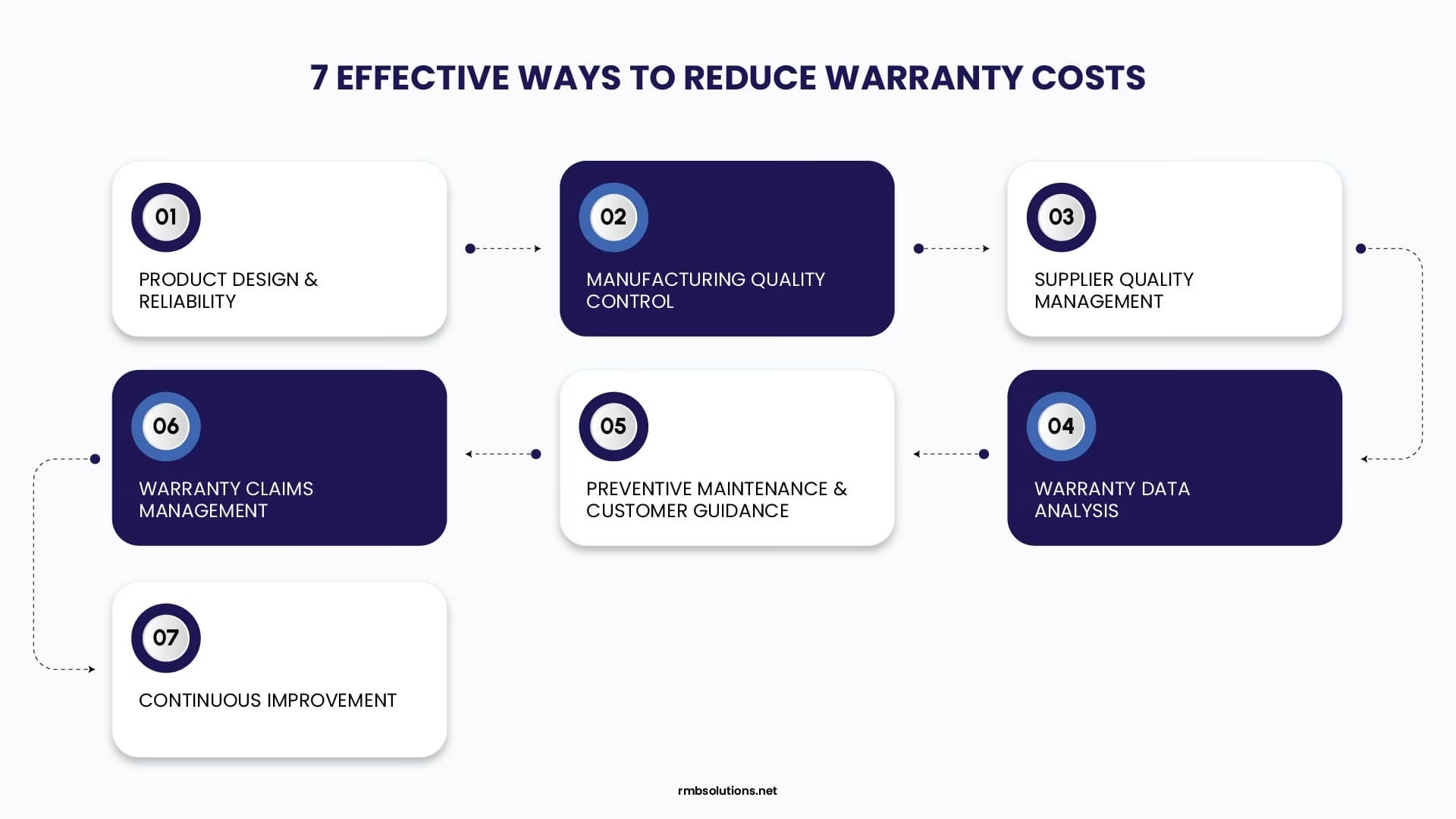
By identifying the root causes of product failures and implementing proactive improvement measures, businesses can reduce warranty claims while still maintaining high levels of customer satisfaction. The following strategies represent some of the most effective ways to lower warranty costs across the product lifecycle:
1. Improve Product Design and Reliability
Reducing warranty costs starts long before a product reaches the customer. When products are engineered for durability, reliability, and real-world operating conditions, they are less likely to fail in the field and generate costly warranty claims. A strong design foundation helps manufacturers avoid problems that are expensive to fix after launch.
Reliability engineering methods such as Design for Reliability (DfR), Failure Modes and Effects Analysis (FMEA), and Design Verification Testing (DVT) help teams identify weaknesses early in the development process. Simulation, stress testing, and accelerated life testing further validate whether a product can perform consistently under expected environmental and operational conditions.
Although deeper investment in the design stage can increase upfront development effort, it often prevents far greater costs later. A product that is more reliable from the start requires fewer repairs, fewer replacements, and fewer warranty interventions over its lifecycle.
2. Strengthen Manufacturing Quality Control
Even a strong product design can produce warranty issues if manufacturing processes are inconsistent. Defects introduced during production, assembly, calibration, or inspection often become warranty claims once the product is in the field. For that reason, controlling variation on the factory floor is essential.
Manufacturers should use a robust quality management system that includes Statistical Process Control (SPC), inspection automation, standardized work instructions, scheduled equipment maintenance, employee quality training, and continuous process improvement. These practices help ensure that products are built to specification and that defects are identified before shipment.
Real-time production monitoring adds another layer of protection by making abnormalities visible as they happen. When quality issues are detected early, teams can correct them quickly and prevent defective units from reaching customers. This reduces warranty exposure while also improving overall production consistency.
3. Improve Supplier Quality Management
Many warranty problems begin with purchased components rather than the final assembly itself. If a supplier delivers inconsistent or defective parts, those failures can appear later as product breakdowns, replacement requests, or repair claims. Managing supplier quality is therefore a direct way to reduce downstream warranty costs.
Effective supplier quality management includes supplier evaluation, qualification, auditing, performance monitoring, incoming material inspection, and formal quality expectations. It also requires ongoing collaboration with suppliers so that issues are not only detected but corrected at the source.
Strong supplier relationships are especially important when components have a major impact on product reliability. By working closely with dependable suppliers and holding them to clear standards, manufacturers can reduce component-related failures and avoid unnecessary warranty spending.
4. Use Warranty Data Analytics to Identify Root Causes
Warranty claims are not just expenses; they are also a valuable source of product performance data. When organizations analyze claim patterns properly, they can identify recurring failures, weak components, process defects, and usage conditions that are driving warranty costs. Without this analysis, valuable insights often remain buried in the data.
Warranty analytics can reveal trends by product model, geographic region, customer segment, failure type, manufacturing batch, and supplier source. When this information is combined with service records, production data, and customer feedback, companies gain a clearer view of what is actually causing failures.
This insight allows engineering, quality, and service teams to move from reacting to claims to preventing them. Predictive analytics and machine learning can also help spot emerging issues earlier, making it possible to address problems before they grow into larger warranty burdens.
5. Implement Preventive Maintenance and Customer Education
Not every warranty claim is caused by a product defect. Some claims arise because of incorrect installation, improper use, lack of maintenance, or misunderstanding of product requirements. These avoidable issues can add significant cost if customers are not properly guided.
Manufacturers can reduce these claims by providing clear installation instructions, user manuals, maintenance schedules, troubleshooting resources, and video support materials.
For industrial and commercial products, preventive maintenance programs are particularly valuable because they help customers keep equipment operating correctly and reduce the likelihood of premature failure.
Customer education is equally important. When users understand how to install, operate, and maintain a product properly, the number of avoidable service calls and warranty claims declines. This protects the manufacturer from unnecessary cost while also improving the customer experience.
6. Optimize Warranty Policies and Claims Management
A warranty program can be expensive even when product quality is strong if claims are handled inefficiently. Slow approvals, incomplete documentation, duplicate submissions, and fraudulent claims all increase administrative cost and reduce control over warranty spending. That is why claims management deserves careful attention.
Organizations should establish clear warranty terms, digital registration processes, automated claim validation, structured repair authorization, fraud detection, and consistent documentation standards. These steps help ensure that only eligible claims are paid and that the process remains efficient for both the manufacturer and the customer.
A warranty claims app can further improve speed and accuracy by reducing manual work and centralizing claim information. When the claims process is easier to manage, organizations can lower overhead, improve compliance, and respond to customers more consistently.
7. Establish a Continuous Improvement Program
Product failures and claim trends change over time, so companies need an ongoing system for reviewing performance, identifying patterns, and implementing corrective action. Continuous improvement ensures that lessons learned from the field are fed back into future decisions.
A strong continuous improvement program includes warranty cost analysis, cross-functional problem-solving, root cause investigations, corrective and preventive actions, customer feedback review, and periodic design evaluation. It also encourages collaboration among engineering, manufacturing, quality, service, and supplier teams so that warranty issues are handled from every angle.
This closed-loop approach helps organizations prevent the same problems from recurring in future product generations. Over time, it improves product quality, reduces warranty exposure, and strengthens the company’s reputation for reliability.
What ROI Can Manufacturers Expect from Reducing Warranty Costs?
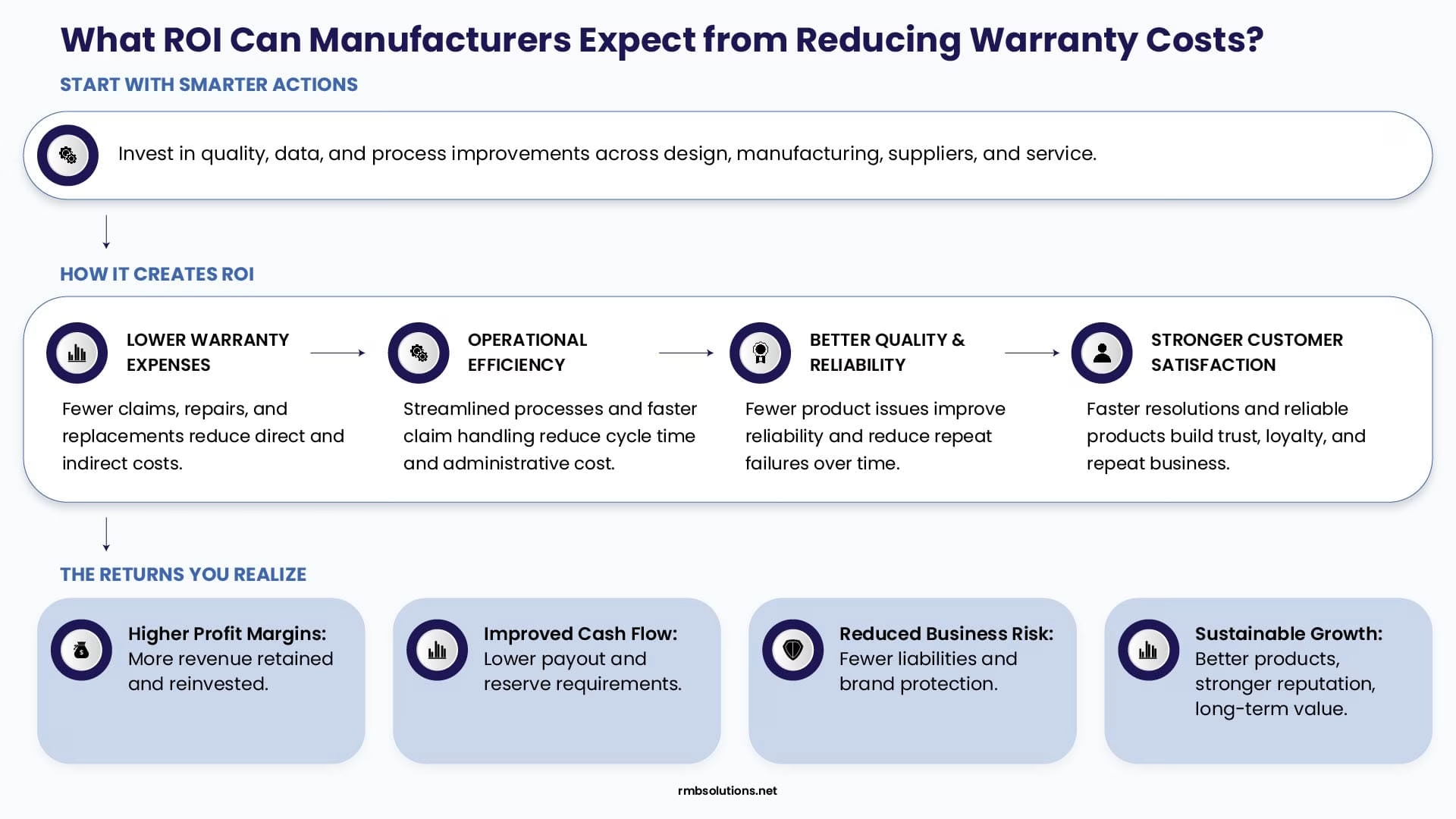
Manufacturers can generate meaningful returns from warranty-cost reduction, but the amount and timing depend on current claim volume, the causes of product failures, supplier-recovery opportunities, and the cost of implementing process or software changes.
The most credible business case should use the manufacturer’s own baseline data and separately estimate lower claim costs, administrative savings, supplier recoveries, and avoid repeat failures.
The return on investment can come from several sources:
Lower Warranty Spend
Reducing product failures, improving claim accuracy, and identifying recurring defects can decrease expenses related to replacement parts, labor, logistics, field service, and claim administration. The actual savings will depend on the manufacturer’s current warranty volume, failure patterns, and operating costs.
Increased Supplier Cost Recovery
Many warranty claims can involve defective supplier components. A structured warranty management process helps manufacturers identify supplier-related failures, document supporting evidence, and pursue eligible cost recovery from vendors instead of absorbing those costs internally. Modern warranty platforms can also improve the visibility and tracking of vendor recovery opportunities.
Improved Operational Efficiency
Connected warranty workflows can reduce manual data entry, minimize processing errors, and improve claim-handling consistency. The resulting efficiency gains depend on the organization’s existing processes, claim volume, and level of automation.
Better Product Development Decisions
Warranty analytics provide engineering teams with real-world performance data that can be used to identify recurring failures and inform future product improvements. Addressing those issues can help reduce future warranty exposure while improving product reliability.
Higher Customer Retention
Customers who experience fewer product failures and receive timely warranty support can have a better overall ownership experience. Improving product reliability and warranty service can therefore support customer relationships and long-term retention.
How RMB Solutions Can Help You Reduce Warranty Costs
Managing product claims requires clear processes, reliable data, and full visibility across operations. RMB Solutions provides warranty management software designed for manufacturers with complex products, dealer networks, and after sales service structures. It brings each stage of the claims process into a single system so teams can track activity, reduce manual effort, and make better decisions.
With RMB Solutions, you can:
- Manage claim submission, review, and approval in a structured workflow
- Identify cases of potential warranty fraud or suspicious claim activity
- Monitor claim costs, trends, and product performance in real time
- Identify recurring product issues through detailed reporting
- Support root cause analysis with centralized claims data
- Recover eligible costs from suppliers through vendor warranty recovery
- Connect warranty processes with ERP, field service, and other business systems
- Improve coordination between engineering, quality, operations, customer service, and suppliers
Ready to improve your warranty process?
discuss your current challenges and see how RMB Solutions can help simplify claims management, improve visibility, strengthen product quality, and reduce warranty related costs.
Frequently Asked Questions
1. How can manufacturers reduce warranty costs effectively?
Manufacturers can reduce warranty costs by improving product design, strengthening quality control, managing supplier performance, analyzing warranty data, and improving how claims are processed across the organization.
2. What are the main causes of high warranty costs in manufacturing?
High warranty costs usually result from product defects, inconsistent manufacturing processes, poor supplier quality, inadequate testing, and lack of visibility into recurring failure patterns.
3. How does warranty data help reduce warranty costs?
Warranty data helps reduce warranty costs by identifying repeated failures, weak components, and process issues. This allows manufacturers to take corrective action and prevent similar problems in future production.
4. What role does supplier management play in reducing warranty costs?
Strong supplier management helps reduce warranty costs by ensuring consistent component quality, identifying defective parts early, and supporting recovery of costs when supplier-related issues occur.
5. Can warranty management software help reduce warranty costs?
Yes, warranty management software helps reduce warranty costs by centralizing claim data, improving visibility into failures, supporting faster analysis, and helping manufacturers identify cost drivers across products and suppliers.

